

Outdoor Accessibility Starts With Less Strain

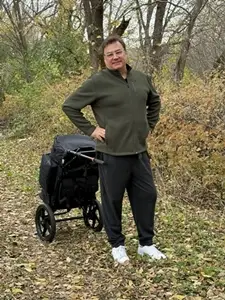
A beautiful trail is not truly open to everyone if getting there means choosing between essential gear and a body that still feels good at mile three. Outdoor accessibility begins when people can move what they need without surrendering balance, energy, or independence.
Key Takeaways
- Outdoor access is shaped by the physical work required before the adventure even begins.
- A hands-free load system can preserve balance, reduce back-and-shoulder strain, and keep useful gear within reach.
- Accessibility is not one feature or one trail surface. It is a chain of practical decisions from parking area to campsite.
- Better mobility design helps hikers, families, travelers, active seniors, and field teams stay self-sufficient outdoors.
Outdoor Accessibility Is More Than a Smooth Path
When people hear accessibility, they often picture a paved path, a ramp, or a wide restroom door. Those details matter. But outdoor access is also determined by what happens between the car and the destination: carrying water, shelter, food, layers, medical supplies, camera gear, recovery equipment, or a child’s essentials across uneven ground.
That work can quietly narrow a person’s choices. A trail may be open, but a heavy backpack can make it impractical. A campsite may be reachable, but hauling supplies in repeated trips can drain the energy needed to enjoy it. A conventional hand cart may handle a flat parking lot, then become one more object to pull, tip, and steady once the ground changes.
Outdoor accessibility asks a more useful question: can someone bring what they need and still move naturally? The answer depends on terrain, distance, weather, load, and individual ability. There is no single piece of equipment that makes every outdoor setting accessible. Yet thoughtful load management can remove one of the most common barriers to participation.
The Hidden Barrier: Carrying the Load
Traditional backpacks put gear directly on the body. For short walks and light loads, that may be the simplest option. As distance, terrain, or gear needs increase, the cost often shows up in sore shoulders, a tired back, reduced arm movement, and a forward-leaning posture that can make footing less confident.
The challenge is not simply the number on a scale. It is how the load changes the way a person walks. When the body has to compensate for every shift, step, and stop, attention moves away from the trail and toward managing the gear.
That problem affects more than long-distance hikers. Parents may need both hands for a child. Campers may need to navigate roots while carrying a full setup. Photographers and anglers need their arms free at the moment terrain demands balance. First responders and search-and-rescue teams must move equipment without giving up mobility. Active travelers want to preserve energy for the destination, not spend it fighting luggage on the way there.
Accessibility improves when the load stops dictating the person’s posture and pace.
Hands-Free Movement Changes the Experience
HipStar approaches this problem as a human-towed, body-worn travel cart rather than a backpack, wagon, or vehicle-towed trailer. The user wears a padded waist harness, while short straps connect the cart’s handlebars to that harness. Gear rides on the cart’s own two wheels behind the user, leaving both hands free.
Its patented weight-neutral system transfers gear weight from the body onto the wheels. That distinction matters. The goal is not to ask people to become stronger just to carry more. It is to let the cart carry the load while the person keeps moving with a more natural gait.
Built-in shock absorbers and the flexible harness are designed to dampen the stop-and-go inertia created by walking. They do not turn rough ground into smooth ground. Instead, they help prevent the load from constantly tugging against the user as their pace changes. The result is a steadier feel that can make a long day outside less physically demanding.
For heavier loads and challenging terrain, the HD model adds disc brakes controlled by levers on the grips. On a steep downhill, the cart can be positioned ahead of the user and followed with the brakes applied, keeping the load controlled. That is a practical example of accessibility as control, not just capacity.
Design Outdoor Accessibility Around Real Decisions
Better access is built through small decisions that add up. Before planning a trip, consider where carrying becomes the limiting factor. Is it the walk from the parking area? The distance between water and camp? The need to keep one hand free for trekking poles, a child, or a map? The return trip, when fatigue changes what feels manageable?
A useful outdoor plan accounts for the whole route, not only the trail itself. That includes the surface underfoot, elevation changes, the number of transitions between car, trailhead, campsite, and lodging, and whether gear needs to serve several purposes during the trip.
For many people, the most effective approach includes four practical choices:
- Keep hands free where balance and quick reactions matter.
- Place the bulk of the load on equipment designed to carry it, rather than on shoulders alone.
- Choose gear that can adapt as the trip changes from trail to airport, hotel, bike route, or campsite.
- Build in room for fatigue, weather, and the extra supplies that make an outing more comfortable and independent.
These are not rules for every adventure. A short, technical hike may still call for a compact pack. A narrow route may require a different plan. Accessibility improves when people have options, not when they are forced into one method of carrying gear.
One Frame, More Ways to Keep Going
Outdoor trips rarely stay in one setting. A journey may begin at an airport, continue through a city, move onto a trail, and end at a campsite or waterfront. Gear that only works in one part of that chain can create new friction everywhere else.
HipStar’s modular design is built around Seven Modes, One Frame: a hands-free all-terrain trekking cart, comfortable backpack, suitcase pulled alongside by its top handle, bicycle trailer, carrier for long items such as a kayak or canopy, child-seat configuration using foam cushions or a car seat, and a fold-flat form for car trunks or airport check-in.
That flexibility is not about adding features for their own sake. It is about reducing the number of compromises people make before they leave home. A family can move camp gear, then adapt the same frame to a different part of the day. An expedition traveler can shift from travel mode to trekking mode instead of managing separate hauling systems. An active senior can choose the configuration that fits the route and the moment.
More than 750 HipStar units have shipped to 32 countries, and both production batches have sold through. That is proof that the need is real across different places, uses, and outdoor cultures. People want a way to bring the gear that supports their adventures without turning every outing into a test of what their shoulders can tolerate.
Independence Belongs on the Trail
Accessible outdoor design should never lower the ambition of the experience. It should make more experiences possible. Someone may want to hike farther, camp with family, carry enough water for a full day, travel with fewer limitations, or keep pursuing the places that have always made them feel like themselves.
The outdoors will always ask something of us. Trails are uneven. Weather changes. Plans evolve. But unnecessary strain should not be the price of participation. When gear moves with the body instead of fighting it, people can focus on route finding, conversation, scenery, and the quiet satisfaction of getting farther under their own power.
Making the outdoors enjoyable again – for every body – starts with treating mobility as part of the adventure, not an afterthought. If carrying gear has become the reason to stay home, JOIN THE PRIORITY LIST and make room for the next route on your terms.