

Inclusive Travel That Goes Beyond the Ramp

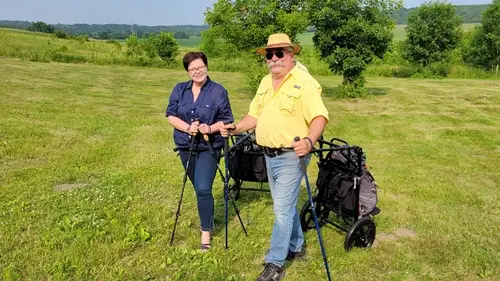
Inclusive Travel Is More Than an Accessible Entrance
Ramps, elevators, clear signage, and accessible restrooms matter. They are essential parts of travel access. But a traveler can reach the entrance and still face a long list of obstacles: luggage that must be lifted, a cart that catches on gravel, a heavy pack that changes their posture, or a family setup that requires too many hands.
That is where the conversation needs to widen. Inclusive travel means looking at the full journey, from packing at home to crossing an airport terminal, rolling through a campground, or moving equipment along a shoreline. Access is not only about getting in. It is about being able to continue.
For active adults, older explorers, parents, and outdoor travelers, the limiting factor is often not motivation. It is the physical cost of hauling what the trip requires. A tent, water, food, recovery gear, camera equipment, a child’s essentials, or work equipment can turn a good plan into an exhausting one when all that weight lives on the body.
Independence Changes the Whole Experience
Being included is not the same as being accommodated after the fact. Real inclusion gives people more control over their own movement.
Consider the difference between joining a hike because someone else agrees to carry your gear and joining because you can manage your own load. Both options may get you there, but only one preserves choice. The same holds true in airports, at festivals, during family camping trips, and on long walking days in unfamiliar cities.
Travelers have different needs, and inclusive design should leave room for that. One person may want to protect their shoulders over a multi-day trek. Another may be rebuilding confidence after years of avoiding physically demanding travel. A parent may need to keep one hand free for a child. A search-and-rescue team member may need to move essential gear across terrain where ordinary luggage is useless.
The common need is not identical strength or speed. It is practical mobility without unnecessary dependence.
Design for the Trip, Not the Average Traveler
Too much travel gear is built around an assumption: the user will carry the load, tolerate the strain, and adjust their body to the product. That assumption excludes more people than it serves.
A more inclusive approach starts with the load itself. Where does the weight go? What happens during the stop-and-go rhythm of walking? Can the traveler keep their hands free? Does the equipment still work when pavement ends and dirt, grass, sand, or rocky ground begins?
These are engineering questions, but they have human consequences. When gear asks less of the body, a traveler may have more energy for the actual reason they came: the view, the people, the work, the challenge, or the quiet.
Why Hands-Free Load Transfer Matters
Traditional backpacks put the burden directly on the back and shoulders. Conventional carts move some weight off the body, but often demand constant pulling, balancing, steering, and attention. They can work well on smooth floors, then become frustrating when the route gets rough or crowded.
Hands-free load transfer offers a different path. The goal is to transfer gear weight onto wheels while keeping the traveler free to walk naturally, use trekking poles, hold a child’s hand, check a map, or maintain balance. That is not merely a convenience feature. For many trips, it is the difference between participating fully and sitting out.
HipStar was built around this problem. Its patented, weight-neutral system moves the load from the body onto the wheels, while a flexible harness and built-in shock absorbers dampen the stop-and-go inertia of natural gait. The result is designed to keep the load steady and far less demanding on the back and shoulders as the traveler moves. More than 750 HipStars are now in use across 32 countries, with both production runs sold through — carried by very different travelers over very different ground.
The distinction matters. The shock absorbers are not a substitute for careful route choices or sensible packing. They address the repeated pull-and-release motion created by walking with a wheeled load. That makes movement feel more natural, especially across longer distances where small strains add up.
One Journey Can Require More Than One Mode
Inclusive travel also means avoiding needless gear changes. A traveler may drive to the airport, fly with equipment, walk through a terminal, pull luggage across a hotel floor, then head out to a trail or campsite. Separate tools for every stage create more lifting, more packing, and more chances for something to be left behind.
A modular system can reduce that friction when it is designed around real transitions. HipStar’s approach is Seven Modes, One Frame: a hands-free all-terrain trekking cart, a backpack, a suitcase pulled alongside by its top handle, a bicycle trailer, a kayak or canopy carrier, a child-seat setup using foam cushions or a car seat, and a fold-flat travel form for trunks or airport check-in.
Not every traveler needs every mode, and that is the point. Inclusion is not forcing everyone into one use case. It is giving people options without requiring a garage full of specialized gear.
For a solo traveler, the trekking-cart and suitcase functions may matter most. For a family, hands-free movement and the ability to carry more than one kind of load can change the day. For expedition users and field teams, the value may be in moving gear over terrain while keeping their hands available for the task ahead.
Build an Inclusive Travel Plan Before You Leave
Better gear helps, but inclusive travel is also shaped by decisions made before departure. Start by identifying the moments where the trip demands the most from your body: transfers, long approaches, stairs, uneven surfaces, parking distances, and the final carry from vehicle to campsite or lodging.
Then pack according to access, not just according to space. Put frequently needed items where they can be reached without unloading everything. Keep essentials close enough to manage on your own. If a route includes varied terrain, avoid assuming that a standard rolling bag will behave like an all-terrain tool.
It also helps to set a travel pace that protects the reason for going. A slower start, a rest break before the steep section, or a route with fewer forced carries is not settling for less. It is planning to stay present for the part of the journey that matters.
The Outdoors, Without the Weight
There is no single definition of an inclusive trip. A quiet campground, a city museum, a multi-day trek, a family beach day, and a response mission ask different things of people and equipment. What they share is the need for movement that respects the person doing it.
Making the outdoors enjoyable again — for every body — starts with recognizing that physical strain is not a badge of honor when it is caused by poorly matched gear. Travelers should be able to carry what matters, protect their energy, and decide how far they want to go.
Before your next departure, look beyond the destination. Ask whether your gear helps you move freely once you arrive. That answer can shape not only the trip you take, but the places you feel ready to pursue next. If that is how you want to travel, join the HipStar priority list to be first in line when the next production run opens.